Post Contents
Getting To Know Kratom
What You Need To Know About Kratom

What is kratom? The answers to this question are often many and varied, and it would not be unusual or them to be conflicting either. Kratom has on different occasions and by different sources been labelled a godsend, an herbal medicament, a helpful drug, a dangerous drug, an illegal substance, a cultural object, and so on.
But to understand what kratom truly is, one should return to its roots and begin from as objective a place as possible. Kratom is a plant that was first discovered in Malaysia and Thailand, and used in both countries by the local populace for various medical as well as recreational purposes. Dubbed Mitragyna Speciosa Korth., the plant eventually became the focus of attention decades after its “discovery” in most of the countries to which it is endemic. While some governments’ legislatures allege the reasons for outlawing it to be related to its detrimental effect on users, other accounts argue that there were other reasons for the ban on the drug—most notably in the Thai case, where a fair number of authorities on the subject have ruled kratom to have been banned without due cause or evidence of its “dangers” and for economic reasons more than any other (it being a threat to the thriving opium trade at the time).
Whatever the truth behind the kratom laws and their motivations, it cannot be denied that kratom is in fairly widespread use in most of the countries to which it is native. In Thailand alone, use has been estimated to reach over 70% in many rural areas, where the herb can often be found growing in forested areas as well as people’s backyards, you might be interested to learn how to grow a kratom plant.
The reasons for use are manifold as well. Some of the stated uses of kratom are yet unproven, e.g. its supposed ability to cure fevers and other ailments. However, even if research on the herb is yet scarce, there is sufficient anecdotal evidence as well as research material to reliably confirm its other traits. Kratom is both a sedative and a stimulant, capable of relieving stress or anxiety, in some cases an effective treatment for depression, capable of curing diarrhea, an antitussive, an analgesic, and a mu-receptor agonist, which makes it capable of producing opiate-like symptoms (relaxation, numbness to pain, euphoria, etc.). As such, it has been used for both pain-relief and the treatment of opiate withdrawal or addiction. It is for this reason that kratom continues to be of such interest to the scientific community and people suffering from pains and opiate addictions worldwide.
The Effects of Kratom
 One of the most important things one should know before trying out a new psychoactive substance—be it something as commonplace as coffee or something more exotic like kratom—is the range of effects that substance typically has on users. The effects of substances like coffee and liquor, of course, are already fairly well known. Those of the less commonplace substances like kratom, however, are often the subject of lively and sometimes argumentative discussion.
Before any more is said on the topic, it must be noted that the research on kratom continues to be relatively thin when compared to the research on many other psychoactive substances—including even illicit ones such as cannabis. This may partly be due to two things. First, kratom is not really available elsewhere but from Southeast Asia, attempts to transplant or grow it in greenhouses and cultures in the west having largely failed. Second, it is also relatively difficult to obtain for research purposes even within its source countries, as it happens to be illegal in most of them (Thailand and Malaysia being examples).
That having been said, there have been a few research studies carried out on it already, as well as on users. There is also a very large (and growing) pool of anecdotal evidence that may be used for information on the herb, as most of the anecdotes overlap and agree on certain points regarding its mechanisms and effects. As such, even if research remains relatively thin, we do know enough to describe the way the herb works and what it does to the average user.
First of all, kratom is a sedative and a stimulant both. It is an odd combination, but at lower doses, it has been noticed to produce a boost in energy as well as in the overall sensation of well-being for the user. Once doses are raised or the kratom has time “to settle”, though, a second-tier effect is reported of sedation or relaxation, which is in keeping with its status as a mu-receptor agonist, like morphine. This means it is capable of not just sedation but pain-relief as well as anxiety-relief.
Kratom is thus capable of substituting for most of the mild to moderate-strength opiates in medical usage, and is in fact widely used as such. The reports of addictive usage, however, are very slim: it seems to have a weaker addictive strength than actual opiates, and as such is proving useful to many suffering from opiate withdrawal.
Beyond that, it has been shown with some fairly good evidence to be antitussive as well as effective for firming up user excretions (to the point that some users add salt to kratom tea to avoid constipation). More information on the herb’s effects is forthcoming as interest in it grows in the scientific community and more research is carried out.
All About Growing and Taking Kratom
How to Grow a Kratom Plant
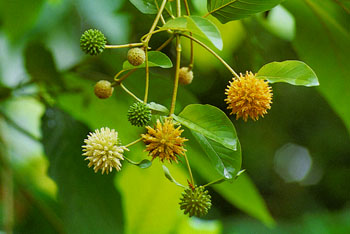 As more and more people in the west discover the uses of kratom—especially its pain-relieving abilities—one of the questions that begins to occupy western users most powerfully when it comes to herb is how to grow it. The answer to the question of how to grow kratom, however, is something that needs to be qualified with care: for there is a curious (although not altogether unique) trait of this plant that affects the matter significantly.
It must be noted first that practically all the kratom used in the west today is sourced from countries in Southeast Asia, where the plant is endemic. Users will not be likely to find kratom sourced “locally in the west”. The reason for this is simple, if slightly mystifying: kratom trees, when transplanted or grown in areas other than Southeast Asia, are apparently incapable of producing the alkaloids necessary for the leaves to have their famous effects. In other words, anyone growing kratom or trying to grow kratom in a place other than Southeast Asia shall be growing a plant that is more ornamental than anything else, and which shall not be capable of providing him with the leaves he might want or need for treatment of some ailment or other.
At present, little is yet known about the cause for this singular preference on the part of the plant. Some attribute it to soil mineral differences, others to climate, and so on, but perhaps the safest answer would simply be the total environment. More studies have to be conducted first before anything is said for certain, but it is sufficient to say that kratom cuttings from the same plant, when grown in different places, may actually have wildly varying amounts of alkaloids, or perhaps even none at all (in the west).
If you still wish to attempt the herb’s cultivation, however, you may want to begin by constructing a greenhouse for your cuttings. Kratom plants tend to thrive in warm, moist environments, so cold is not conducive to their growth. Investing in a good fungicide would also be wise, as the cuttings are notoriously prone to suffering fungus attacks.
After that, growth is much like that with any other (slightly reluctant) cutting: a gamble. Simply give the cuttings as much attention as they might require and if they do put out roots, guard them carefully and ensure they are always well-watered. Young kratom effect tends to be weak, but the older it gets, the hardier it is, so you merely need to give it a lot of attention while it remains juvenile.
The Proper Way of Taking Kratom
 Something a lot of people who use kratom for recreation ask is whether or not they can combine the substance with other psychoactive drugs in order to achieve particular or stronger effects. While you can actually mix kratom with some drugs, it should always be done with caution and with the knowledge that any drug is best taken on its own, as drug interactions are often complex and in some cases problematic enough to be serious health risks. Furthermore, not all drug combinations work well for everyone. This why there are no official drug combinations for kratom: people tend to react differently to the results, after all.
Consider one of the most common drug combinations for this herb: kratom with alcohol. The anecdotes on this particular combination are fragmented and actually wildly diverse. Some accounts report heightened libido with the combination, for instance, while others reported lower libido. Some reported a higher chance of erectile dysfunction (which is more believable because it has long been linked with alcohol usage). Furthermore, some reported it to be more soothing than usual; on the flip side, others reported it to be unpleasant and fog-inducing.
There are some combinations that are simply not advised with the herb. For example, because kratom can heighten the effects of CNS depressants to an extent not advisable, it is suggested that those taking such medications stay away from the herb. People already taking substances with sedative effects but who need to stay on their feet should stay away from it too, as the sedation shall likely increase with the addition of kratom to that situation. Furthermore, people using kratom extracts are advised to never mix them, whether with other kratom products or other drugs. Finally, one should never mix it with MAO inhibitor drugs, as this has been said to be a potentially lethal combination.
Kratom, like most drugs, is really best taken by itself. But if you feel as though you want to try a combination, it is best to go with other herbs instead of actual synthetic drugs. Furthermore, it is best to ask for the advice of long-time users so that you have the knowledge of others helping you along the way. Otherwise, you may well be playing trial and error with yourself as the guinea pig.
However, despite it being legal in the United States, this does not entirely mean that Kratom is safe. Like most drugs, Kratom can be very beneficial when used responsibly. The feeling of calmness and relaxation it brought was incomparable to any kind of drug. It also helps with anxiety attacks. Add the fact that there was an abundance of supply, it was legal to possess and it was cheap, Kratom seemed to be the answer to all problems.
Avoiding the Bitterness and the Pain of Kratom
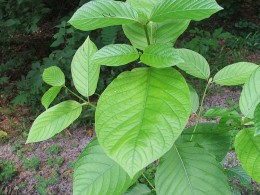 The bitter taste of Kratom has been an issue for users who want to give the herb a try. A number of ways was put forth to try to hinder the bitter taste of this special herb.
One could consider mixing it with fruit-flavored products like fruit juices and fruit sauces. Applesauce and other thick preserve-like sauces are favorites, as their sweetness overpowers the kratom. You can also mix the kratom with some fruit drinks and see if it is to your liking. Generally speaking, the more powerful-tasting the drink is, the better your chances are of masking the kratom. You can even take the kratom first as a shot and then wash it off your tongue with the help of a fruit juice.
You can use sour-tasting products like yoghurt for kratom consumption without the bitterness. Something that works very well is a cold yoghurt drink, particularly the ones that have an added fruit flavor (for stronger taste). Mix the kratom powder in the drink, making sure it is perfectly blended in, chill the drink again, and then just drink it as you normally would. Many users swear by this method and say it is one of the most enjoyable ways to drink kratom.
Traditionally, Kratom has been used as a mild stimulant for manual labor in countries such as Thailand, Myanmar, and Malaysia. Surprisingly, it is illegal in all three countries and remains legal in the United States. However, it has been placed under the careful watch of the FDA. Kratom can come in many forms with dried leaves, powder, and tea form being the most common. Up until recently, Kratom is also available as an intravenous injection.
It is then not difficult to form a habit of using Kratom. For people who have a history of addiction, it would be best to stay clean of such substances. The effects of Kratom can be quite pleasing, making it extremely hard to resist after one pleasant experience. Kratom is addicting in the truest sense.
How a Person’s Kratom Intake Changes Everything
 Kratom may be a blessing in many ways, but definitely not in taste. The herb is infamous for the pungency of its leaf: the taste is much better when it is still fresh, of course, but since most of the kratom that reaches US shores is the dried and pulverized variety, as the fresh leaves go bad too quickly for export, American users have no choice but to grin and bear it.
There are some things you can do in order to mitigate the bitterness of kratom, however. Mixing kratom with a variety of drinks and condiments or foods can actually help you bring down the bitterness to a tolerable level, and some of these mixes may even remove it almost completely from notice. A popular and simply option is coffee. Coffee is the medicine or herb mix par excellence—it has been for literal centuries—due to its own inherent bitterness and the power of its natural flavor. It tends to overcome other flavors, so kratom’s own taste disappears under it, masked by an infinitely stronger taste. That said, not everyone finds the combination pleasant. If you have issues with the caffeine mixing with your kratom, use decaffeinated blends only.
Due to its resemblance to a certain very popular herb also used for recreational activity, many people often wonder if kratom can be smoked effectively by users. While no hard and fast answers exist to this, the prevailing opinion is that one may in fact smoke it to experience the herb’s intended effects, but in a much milder form and for a shorter duration of activity. Those who have tried smoking kratom have also reported that it requires a great deal of leaf to be smoked before any effects are even noted.
This is likely due to the manner in which alkaloids—kratom’s active components—are absorbed by the human body. While they can be absorbed even through the skin, the rate of absorption is so low and slow for that method that it is literally insignificant: the most effective means of absorbing them is orally, which explains why all the methods for taking kratom that are in favor among longtime users involve ingestion.
Kratom absorption through smoking is problematic too since the alkaloids (if any) that survive the heat and are present as particulates in the smoke are often so dispersed that the concentration itself is considered ineffective. This may well be why it takes so many grams of kratom leaf and so many minutes of smoking before a user begins to feel a tickle of the kratom buzz or euphoria. Even high-quality kratom will yield low-concentration alkaloid smoke.
On the whole, smoking kratom is simply an inefficient way of absorbing its alkaloids, and is thus a wasteful way of using kratom. While some users allege that they have found good results from the combination of kratom leaf with other smoked drugs, this is to be avoided, as mixing drugs is generally dangerous. People who have kratom should stick to traditional methods of ingestion through tea or chewing of the leaf, as they have long been practiced by people in kratom’s native country and noted to be vastly more efficient.
Kratom Recipes
Recipe for Mango and Kratom Lassi
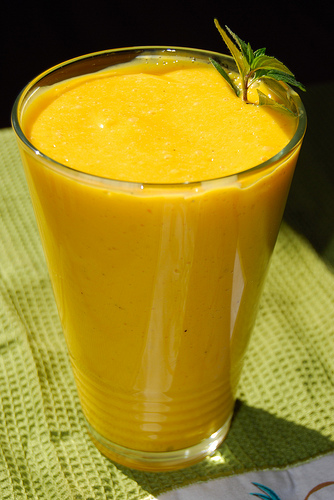 One of the downsides of taking powdered kratom, at least for some people, seems to be its tendency to induce indigestion or stomach pains after consumption. Some attribute this to the introduction of bacteria during the drying and grinding process in the factory, and suggest the consumption of a probiotic substance to help the body power through it. This recipe includes that probiotic in the list of ingredients, making it possible to consume the solution before the problem even starts. While this may not ease every kratom user’s indigestion, it has been shown to have positive results for most, and may be worth trying. Furthermore, mixing kratom powder with lassi has the added benefit of being delicious, at least if this recipe is followed.
The recipe itself is plain enough and simple to follow. You start by getting your regular kratom dose—that would typically be 7g to 10g for most careful users—and then set it aside in a bowl or glass for the moment. Remember: the kratom should be powdered or grounded finely. This makes it possible to consume it with the lassi without it being too noticeable or gag-inducing.
Next, you prepare a cup of plain (unflavoured) yoghurt. Most groceries actually sell this by the cup, so that ingredient should be fairly easy. Empty the yoghurt into a blender and then add 2 tablespoons of sugar or the sweetener of your preference. You can actually make it even sweeter if you would like: it would not harm the drink.
Next comes the true flavouring: the mango. Find a nice, big, yellow mango from your local market and slice off one cheek. Add the flesh of that mango half to the blender and then blend everything until it is smooth. Now you can add the kratom. Blend it once again, this time just to mix the kratom with everything, and you have your mango and kratom lassi.
Take note, however, that you can actually make a lower-calorie version of this drink. The mango in itself has quite a lot of calories already, but you can reduce the total calories in the lassi by using a zero-cal sweetener and even a low-fat yoghurt instead.
Cranberry Kratom Smoothie Recipe
 This recipe in particular relies on the powerful sour-salt taste of cranberry juice to mask the presence of kratom in the drink.
Before anything else, let us clarify that there are two methods of adding kratom to this smoothie. First, you can add it as a plain powder in the amount that is your usual dosage, and then simply blend the kratom with the rest of the ingredients. The other option would be to make your regular kratom tea by boiling down a dose of the leaves in water twice (this allows for better extraction), then to use the resultant liquid (filtered, of course) by mixing it with the other ingredients here. Either way is fine, provided you are certain it is the method you prefer.
Start by getting one cup of cranberry juice from your fridge. It does not need to be cold, but it does taste better when made with cool ingredients. Pour the juice into a blender and then add 1 cup of ice cubes to it. You can crush the ice cubes before putting them in the blender by popping them in a sturdy plastic bag and slamming that against a hard surface. This makes it easier on your food processor to achieve that nice, slush-like consistency.
Next, add 1 cup of frozen cranberries to the mix. Again, they do not need to be frozen, but they taste better when they are. Follow that with 1 teaspoon of sugar (or however much you want) and then the kratom. Once everything is in the blender, you are good to go: blend everything together until you manage to create a smooth slurry, and then transfer that to a glass and enjoy your cranberry and kratom drink.

@yourkefirsource
Giselle
Latest posts by Giselle (see all)
- The Magic of Damiana - July 15, 2015
- Baobab Cosmetics | An Increasing Market For The Cosmetic Industry - June 21, 2015
- Baobab | The New Super Tree - June 15, 2015

Those drinks sound delicious! I’ve only had kratom tea, but now I think I’m going to try those out